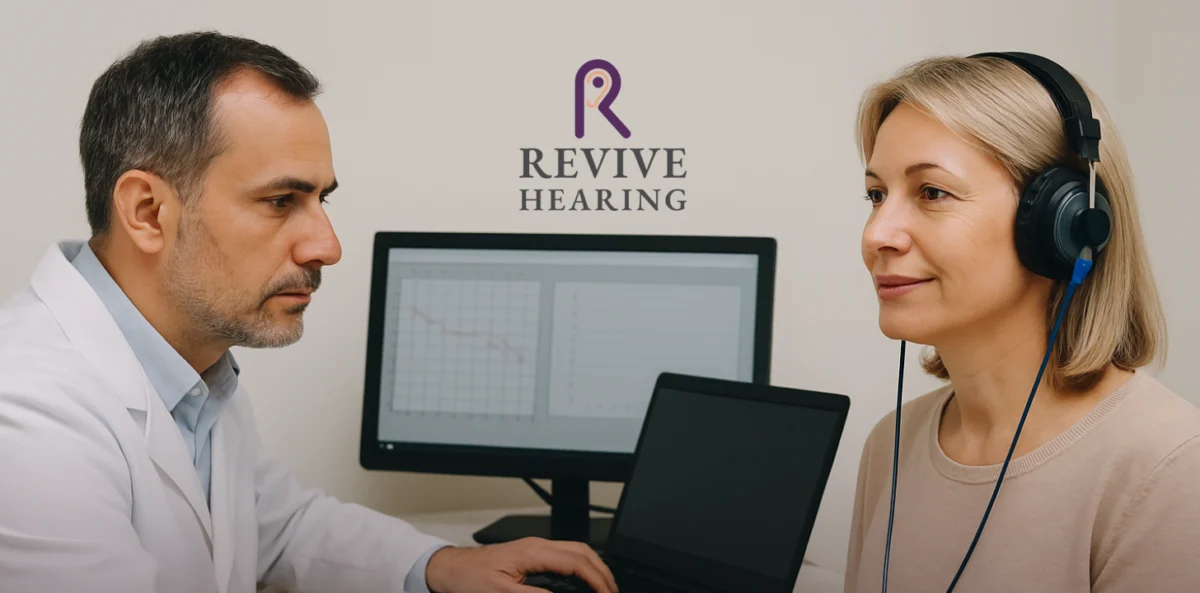
Introduction – AI in audiology
The field of audiology is experiencing a groundbreaking evolution, thanks to artificial intelligence (AI). No longer confined to sci-fi movies, AI is now a reality in hearing healthcare—enhancing diagnostics, personalizing treatments, and improving patient outcomes.
At Revive Hearing, we embrace these innovations to provide smarter, faster, and more accurate hearing care. Whether it’s AI-powered hearing tests, adaptive hearing aids, or remote monitoring, these advancements are reshaping how we approach hearing loss.
But how exactly is AI making a difference? Let’s explore the key ways smart technology is revolutionizing audiology.
Smarter Hearing Tests: Faster, More Accurate Diagnostics
Gone are the days of purely manual hearing tests. AI-powered audiometry is setting a new standard with:
🌟Real-Time Adaptive Testing
- Traditional tests follow a fixed protocol, but AI adjusts questions based on patient responses, reducing test time by up to 50%.
- Example: If a patient struggles with high-frequency sounds, AI focuses there for a more precise diagnosis.
⚠️ Early Detection of Subtle Hearing Loss
- Machine learning algorithms detect patterns that human audiologists might miss.
- Useful for identifying early-stage hearing loss in at-risk groups (e.g., musicians, factory workers).
⚠️ Reduced Human Error
- AI eliminates inconsistencies caused by fatigue or subjective judgment.
- Ensures repeatable, reliable results for better treatment planning.
Did You Know? A 2022 study in JAMA Otolaryngology found that AI-assisted hearing tests were 20% more accurate than traditional methods in noisy environments.
Data-Driven Diagnostics: Predicting and Preventing Hearing Loss
AI doesn’t just diagnose—it predicts and prevents. By analyzing massive datasets, AI helps in:
🌟 Identifying High-Risk Patients
- AI cross-references genetic data, lifestyle factors, and medical history to flag individuals at risk of hearing loss.
- Example: Diabetics are twice as likely to develop hearing issues—AI can prompt early screenings.
⚠️ Personalized Treatment Plans
- Instead of a one-size-fits-all approach, AI tailors solutions based on:
- Hearing preferences (e.g., music lovers vs. frequent meeting attendees).
- Environmental noise exposure (urban vs. rural living).
⚠️ Integration with Health Records
- AI syncs with electronic health records (EHRs) to track hearing changes over time.
- Helps audiologists spot trends (e.g., medication-induced hearing loss).
Pro Tip: Regular AI-assisted check-ups can catch ototoxicity (ear damage from medications like chemotherapy drugs) before it becomes severe.
Hearing Aids That Learn: AI-Powered Sound Adaptation
Modern hearing aids are no longer just amplifiers—they’re smart, self-learning devices. Here’s how AI is upgrading them:
⚠️Real-Time Environmental Adaptation
- AI hearing aids scan surroundings and adjust settings instantly.
- Café mode: Boosts speech, reduces clatter.
- Outdoor mode: Minimizes wind noise.
⚠️Personalized Sound Preferences
- Learns user habits (e.g., prefers softer treble, louder bass).
- Adjusts automatically over time for a customized listening experience.
⚠️Advanced Noise Suppression
- Uses neural networks to separate speech from background noise.
- Example: In a crowded restaurant, AI enhances the voice of the person in front of you while muttering other chatter.
✅Case Study: AI Hearing Aids in Action
A 2023 study by Stanford University tested AI hearing aids in noisy environments. Results showed:
- 30% improvement in speech understanding.
- 40% reduction in listening effort.
- Users reported higher satisfaction compared to traditional aids.
Teleaudiology and Remote Monitoring: Hearing Care from Home
AI is breaking geographical barriers with remote hearing care. Key features include:
✔️ Virtual Hearing Tests
- Patients can take preliminary hearing assessments via smartphone apps.
- AI analyzes results and recommends next steps (e.g., in-person visit if significant loss is detected).
✔️ Remote Hearing Aid Adjustments
- Audiologists can fine-tune settings via cloud-based platforms.
- No need for frequent clinic visits—ideal for elderly or rural patients.
✔️ Real-Time Health Alerts
- AI monitors hearing aid usage and detects anomalies (e.g., sudden drops in hearing ability).
- Sends alerts to audiologists for timely intervention.
- You prefer a lower upfront cost, need extended battery life on the go, or don’t mind changing batteries regularly.
Future Outlook: By 2025, 60% of hearing care could involve some form of teleaudiology, making hearing healthcare more accessible than ever.
Final Thoughts: AI Empowers Audiologists (Not Replaces Them)
Some fear AI will replace human audiologists—but the truth is, AI is a tool that enhances expertise.
At Revive Hearing, we combine cutting-edge AI with compassionate care to deliver:
✔ Faster, more accurate diagnoses.
✔ Personalized hearing solutions.
✔ Remote care options for convenience.
The future of audiology is smarter, more connected, and more patient-centric—thanks to AI.