

Beaconsfield
Beaconsfield Family Medical Practice
144 Weld StreetBeaconsfield TAS 7270

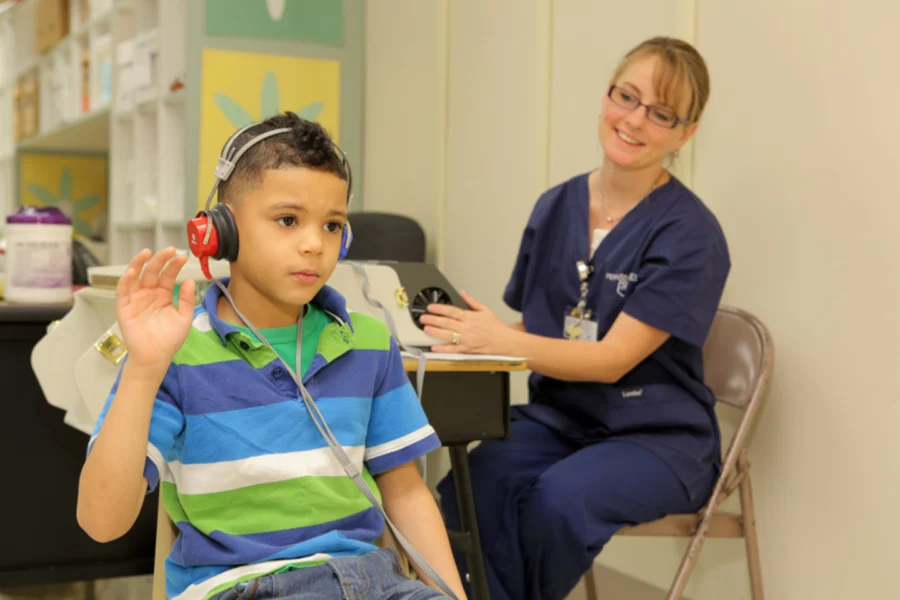
A kids' hearing test checks how well your child hears and understands speech, and looks for common problems such as glue ear or wax. We test children aged 5 and over. It is painless, and you stay with your child throughout.
Call us and describe what is happening. We will point you to the right appointment.
We ask about health, ear infections, school and any concerns from teachers.
A gentle look in the ears for wax, infection or fluid.
Your child listens for beeps through headphones and repeats words, responding by pressing a button or raising a hand.
A quick pressure test that picks up glue ear and Eustachian tube problems.
Tell them it is a listening activity with headphones and it does not hurt.
Talk about checking their ears are healthy, rather than a test they might fail.
A favourite toy can help nervous children settle.
Book when your child is usually rested and alert, often in the morning.
We see children aged 5 and over. For younger children and babies, we can suggest a paediatric service.
Whenever you or their teacher have concerns, after repeated ear infections, or if their speech or schoolwork changes.
Yes. Even mild or temporary hearing loss, such as from glue ear, can make it hard to follow lessons and can affect speech, attention and confidence.
We explain the results and, where needed, write to your GP so they can arrange treatment or referral to an ENT specialist.
Available at all four of our Northern Tasmania clinics.
Beaconsfield Family Medical Practice
144 Weld StreetIn Good Hands OT
355 Wellington StreetLilydale Family Health Care
1977 Main RoadRevive Hearing consulting rooms
16 Freshwater Point RoadBook online in a couple of minutes, or call and we will find the earliest time at the clinic nearest you.