Choosing the Right Hearing Aid for Your Lifestyle
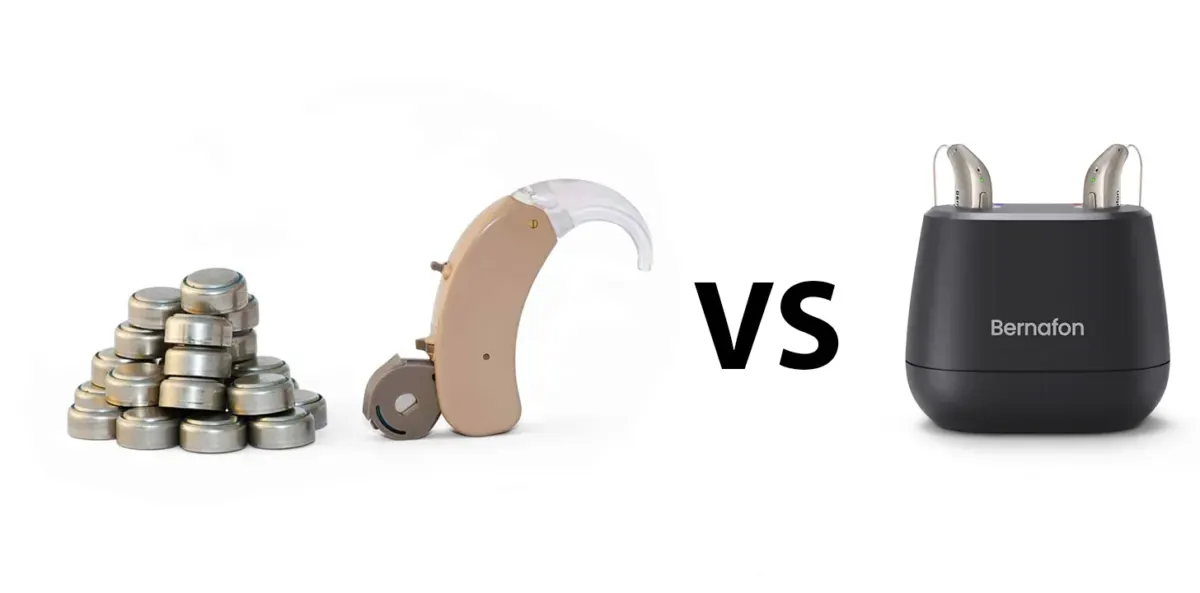
Hearing aids are no longer one-size-fits-all – today’s models come with advanced features, including how they’re powered. The two main types are rechargeable and battery-powered hearing aids. Each has unique benefits, and the right choice depends on your lifestyle, budget, and preferences. Let’s break it down!
1. Rechargeable Hearing Aids: Convenient and Eco-Friendly
How they work: Built-in lithium-ion batteries (like your smartphone) recharge overnight.
🌟 Pros:
- Ease of use: No more fiddling with tiny batteries – just pop them in the charger.
- Eco-friendly: No need to dispose of batteries regularly.
- Longer daily life: Most models last 18-30 hours on a single charge.
- Cost-effective (long-term): No ongoing battery purchases.
⚠️ Cons:
- Upfront cost: Rechargeable hearing aids are generally more expensive initially.
- Charging dependency: You’ll need access to a charger, especially during travel.
- Battery lifespan: The built-in battery lasts 4-5 years, meaning it may need replacement eventually (which requires professional help).
Best for: Active users, people with dexterity challenges, and those who prefer hassle-free, eco-conscious options.
2. Battery-Powered Hearing Aids: Traditional and Reliable
How they work: Replaceable zinc-air batteries (sizes 10, 13, 312, or 675) power the device.
🌟 Pros:
- Lower upfront cost: Generally cheaper than rechargeable models.
- No charging required: Ideal for camping, traveling, or power outages.
- Quick battery swaps: A fresh battery is ready in seconds.
⚠️ Cons:
- Ongoing costs: Batteries need replacing every 3-10 days, depending on usage and size.
- Fiddly for some users: Small batteries can be tricky to handle, especially for those with dexterity issues.
- Environmental impact: Disposing of batteries frequently isn’t as eco-friendly.
Best for: Budget-conscious users, occasional hearing aid wearers, and those who travel to places without reliable electricity.
3. Key Factors to Consider
Still unsure? Let’s compare the essentials:
| Feature | Rechargeable | Battery-Powered |
|---|---|---|
| Convenience | ✔️ Easy overnight charging | ❌ Manual battery changes |
| Cost | ❌ Higher upfront, but cheaper long-term | ✔️ Lower upfront, ongoing battery costs |
| Battery life (daily) | ✔️ 18-30 hours per charge | ✔️ 3-10 days per battery |
| Dexterity-friendly | ✔️ No tiny batteries to handle | ❌ Small batteries may be tricky |
| Eco-friendliness | ✔️ Fewer disposable parts | ❌ Frequent battery disposal |
| Travel-friendly | ❌ Needs a charger | ✔️ Battery swaps anytime |
Warning If these signs persist, it’s a red flag. Repeated exposure can cause permanent hearing loss.
4. Final Thoughts: Which One is Right for You?
✔️ Choose rechargeable if
- You value convenience, have dexterity challenges, or want an eco-friendly, long-term option.
✔️ Choose battery-powered if
- You prefer a lower upfront cost, need extended battery life on the go, or don’t mind changing batteries regularly.
How to Compare Bluetooth Hearing Aids by Battery Life, Recharge Options, and Comfort
Modern Bluetooth hearing aids in 2026 do far more than amplify sound — they act as discreet wireless headsets for hands-free phone calls, GPS navigation, and crystal-clear television audio streaming. However, continuous wireless streaming places added demands on battery capacity.
When comparing Bluetooth-enabled models across leading global manufacturers (including Signia Integrated Xperience, Phonak Audéo, ReSound Nexia, and Starkey Genesis AI), evaluate these key clinical factors:
| Clinical Feature | Rechargeable Lithium-Ion | Disposable Zinc-Air Battery |
|---|---|---|
| Daily Runtime (with 4+ hrs Streaming) | 20 – 30 hours continuous power | 3 – 7 days per battery change |
| Recharge Time & Quick Charge | 3–4 hrs full charge; 30-min fast charge gives 6 hrs | Instant (replace battery cell manually) |
| Physical Dexterity Required | Minimal — easy drop-in magnetic charging dock | High — tiny stickers and battery doors |
| Discreet Comfort Behind the Ear | Streamlined Receiver-In-Canal (RIC) housing | Available in RIC, BTE, and Custom CIC styles |
| Travel & Off-Grid Convenience | Portable power bank cases hold 3–4 backup charges | Carry small packet of backup batteries anywhere |
What Are the Disadvantages of Rechargeable Hearing Aids?
While over 85% of Tasmanian patients choose rechargeable hearing aids for daily convenience, our commitment as an independent clinic means giving you complete transparency on the potential trade-offs:
- Slightly Higher Upfront Investment: Rechargeable kits typically carry a $200 to $400 premium over standard battery models due to the lithium-ion cells and smart charging dock.
- Reliance on Charging Docks: If you embark on multi-day bushwalks or off-grid camping across Tasmania without access to mains power or a USB power bank, you must remember to bring a charged portable case.
- 4 to 5 Year Battery Cell Lifecycle: Because lithium-ion cells are hermetically sealed inside the casing for moisture and dust protection (IP68 rating), the internal cell will eventually require servicing after 4 to 5 years of daily charge cycles.
- Ultra-Small Deep Canal Styles: If you want a tiny Invisible-In-Canal (IIC) device that sits deep inside the ear canal, traditional size-10 zinc-air disposable batteries still allow for the smallest possible shell.
Frequently Asked Questions: Rechargeable vs. Battery Hearing Aids
Which is better: hearing aids with disposable batteries or rechargeable?
For 90% of adults, rechargeable hearing aids are the better choice because they eliminate the frustration of handling tiny button batteries, provide superior IP68 moisture protection, and support all-day Bluetooth streaming. However, disposable batteries remain ideal for off-grid travellers or patients wanting ultra-miniature deep-canal fittings.
How to choose the right rechargeable hearing aid for your budget and lifestyle?
Start by matching the technology tier to your social activity: Essential models ($1,500 – $3,000/pair) suit quiet home life and TV; Mid-Range models ($3,500 – $5,500/pair) handle small group dinners and cafes; and Premium AI models ($6,000 – $9,000+/pair) excel in loud restaurants and active workplaces. Always request a real-world clinic trial before committing.
How long does a rechargeable hearing aid battery last each day?
Modern lithium-ion hearing aids provide 24 to 30 hours of runtime per charge. Even with 4 to 6 hours of active Bluetooth phone and TV streaming, they comfortably last a full 18 to 22 hours before overnight charging.
Are rechargeable hearing aids covered under the Australian Government HSP Program?
Yes. Eligible Australian pensioners and DVA cardholders receive fully subsidised hearing assessments and digital hearing devices through the Hearing Services Program (HSP), with optional top-up subsidies available for advanced rechargeable and Bluetooth models.
Trial Rechargeable & Battery Hearing Aids in Tasmania
Compare leading brands side-by-side with independent Principal Audiologist Sharada Tammali across our Beaconsfield, South Launceston, Lilydale, and Legana clinics.
Explore: Hearing Aid Fittings | Our Clinic Locations